
SIP Panels UK for Self Build 2026: Faster, Warmer, Compliant Homes
A practical guide for self builders choosing structural insulated panels in the UK, with U-values, airtightness, cost planning, and a clear build sequence.
Key takeaways for self builders
- SIP panels UK projects benefit from a factory-made, insulated structure that goes up fast and stays warm. li>
- U-values and airtightness are the two biggest performance levers for comfort and lower energy bills.
- Early design decisions reduce on-site changes, waste, and unexpected costs.
- Cold weather work is easier with SIPs because the envelope can be sealed quickly.
- Use the UltraSIPs configurator and U-value calculator to confirm spec before you commit.
Table of Contents
- Why self builders choose SIP panels in 2026
- What SIP panels are and how they are built
- U-values and UK Building Regulations (Part L)
- Airtightness and cold weather comfort
- Speed of build and programme planning
- Design, engineering, and detailing for self builds
- Budgeting and cost control
- Build sequence: from configurator to weather-tight shell
- Common self build mistakes and how to avoid them
- Sustainability and long-term value
- Self builder FAQ
- Next steps and resources
New year planning is when most UK self builders get serious about the build method. Energy prices, colder winter seasons, and tighter Building Regulations are pushing more people toward high performance envelope systems. That is where SIP panels UK projects really shine. Structural insulated panels combine insulation and structure in one factory-made panel, giving you a faster route to a warm, compliant home.
This guide is written for self builders who want clear, practical answers. We will explain what SIP panels are, how U-values and airtightness affect comfort and energy bills, and what to expect from a real-world build sequence. We will also point you to the UltraSIPs configurator and U-value calculator so you can make decisions with confidence, not guesswork.
1. Why self builders choose SIP panels in 2026
Self builders value control, predictability, and the ability to move quickly when conditions are right. SIP panels help you lock in performance early and get a weather-tight shell faster than traditional build methods. In the UK, that matters because the build season can be unpredictable. The shorter your shell build window, the less risk from heavy rain, frost, and delays that push you into the most expensive months.
SIP panels also support a cleaner build process. Because the panels arrive precision-cut and ready to install, you avoid prolonged on-site framing, scattered insulation work, and the repeated return visits that drain time and budget. You can move earlier to internal trades, which is a major advantage if you are managing the build alongside work and family commitments.
Performance is the other reason. SIPs are known for excellent insulation and airtightness. A good SIP shell makes it much easier to meet Part L energy targets, and it improves comfort immediately. You feel the difference in consistent temperatures, fewer drafts, and lower heating demand. That is why the self builder community increasingly sees SIPs as a smart investment rather than a premium add-on.
- Speed and predictability: fewer build stages and faster weathertight shells.
- Performance from day one: insulation and structure combined in one element.
- Lower energy bills: airtight construction reduces heat loss and drafts.
- Cleaner sites and less waste: factory-made panels reduce offcuts.
- Confidence with compliance: U-values and airtightness can be designed in early.
2. What SIP panels are and how they are built
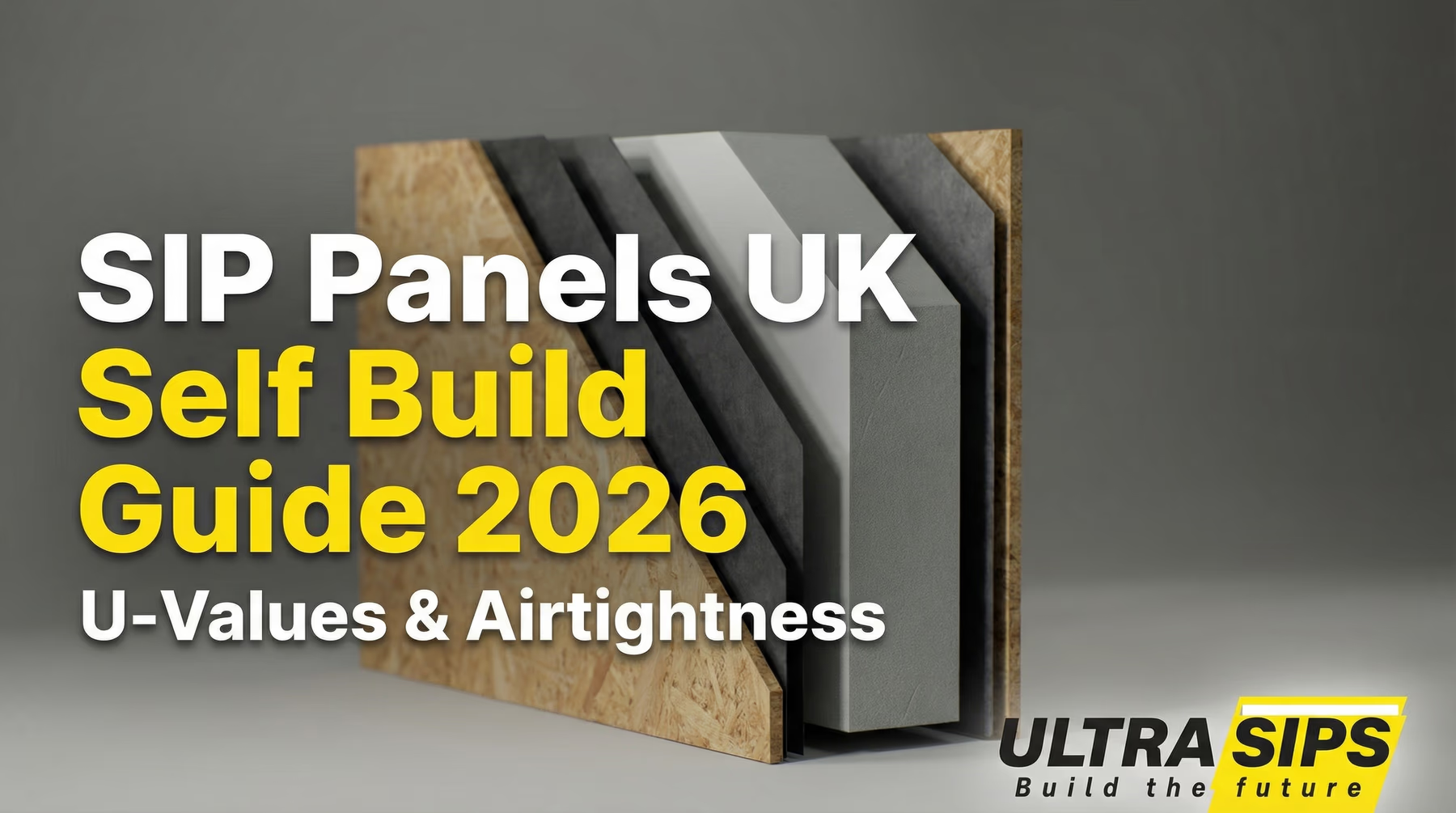
Structural Insulated Panels (SIPs) are engineered building panels made from a rigid insulation core bonded between two structural facings. In UK projects, the facings are typically OSB3 and the insulation core is a high performance PIR such as Celotex. The result is a rigid, strong panel that functions as structure and insulation at the same time.
UltraSIPs manufactures SIP panels using Sterling OSB3 facings and Celotex insulation, creating a durable panel with strong thermal performance. The panels are cut and prepared in a controlled environment, so tolerances are tight and the on-site assembly is predictable. Openings for doors, windows, and service routes can be planned in the design stage, which reduces on-site modification and potential errors.
How SIP panels differ from traditional timber frame
- Insulation is integral: no separate cavity insulation stage.
- Continuous thermal layer: fewer cold bridges across studs and junctions.
- Precision manufacturing: panels arrive square, straight, and consistent.
- Fewer build stages: structure and insulation installed together.
- Better airtightness potential: fewer joints and larger elements.
For self builders, this means fewer moving parts. You can plan the shell, schedule the delivery, and get to a weather-tight stage quickly. It also means your thermal performance is designed into the structure rather than added later as an afterthought.
3. U-values and UK Building Regulations (Part L)
If you are self building in the UK, U-values are a key part of your Building Regulations strategy. A U-value measures how much heat passes through a building element. Lower U-values mean better insulation. Part L focuses on energy performance, and your wall, roof, and floor U-values all contribute to compliance.
SIP panels are an efficient way to hit strong U-values without bulky build-ups. For example, a 122mm SIP panel with a 100mm Celotex core can achieve a U-value around 0.209 W/m2K, while a 97mm panel is around 0.264 W/m2K. The exact value depends on your full build-up, internal and external finishes, and junction detailing, so always check the final spec rather than relying on generic numbers.
The easiest way to verify performance is to use the U-value calculator and test different core thicknesses. That allows you to align your design with Building Regulations early, which saves time and rework later. If you are unsure how your wall and roof specs compare, calculate them first and share the results with your designer or Building Control officer.
4. Airtightness and cold weather comfort
In a UK winter, comfort is as much about airtightness as it is about insulation. Even a well insulated wall can feel cold if air leaks are pulling heat out. SIP panels reduce those leaks because there are fewer joints and the insulation layer is continuous. That makes it easier to achieve a tight envelope with fewer drafts and more stable indoor temperatures.
Airtightness does not mean sealing the building and hoping for the best. It means controlling where air flows. As you plan your SIP build, you should also plan your ventilation strategy. Many self builds use mechanical ventilation with heat recovery, but even simpler ventilation systems can work well if they are designed and installed correctly.
- Seal junctions properly: pay attention to wall-to-roof and wall-to-floor interfaces.
- Plan service penetrations: avoid last-minute holes through airtight layers.
- Use appropriate tapes and membranes: airtight detailing makes a measurable difference.
- Prioritize window and door installation: these are the most common leak points.
- Ventilation is essential: airtightness and fresh air must go together.
5. Speed of build and programme planning
Speed is not just about convenience. For self builders, it is a risk management tool. The faster you get to a weather-tight shell, the fewer months you are exposed to unpredictable weather, rental costs, and price fluctuations in labor and materials. SIP panels are delivered ready to install, which compresses the critical path for your build.
SIP shells are often assembled in days rather than weeks. That does not remove the need for careful planning, but it does mean that your team can move quickly once the panels arrive. If you have a limited time window or you want to keep the build moving through winter, SIPs can be a real advantage.
- Freeze design early: late changes can slow manufacturing and delivery.
- Prepare access and storage: panels need safe, dry handling on arrival.
- Confirm lifting strategy: a clear crane plan saves time and cost.
- Sequence trades: line up follow-on work so the momentum continues.
- Protect the shell: weather protection keeps the build on track.
6. Design, engineering, and detailing for self builds
A self build is successful when the design and the build system align from the start. SIP panels reward good planning. The earlier you decide on window positions, roof loads, and floor layouts, the smoother the process becomes. You still need a structural engineer to verify spans and connections, but SIPs can simplify the number of components and details you need to coordinate.
Think about service routes early. Electrical and plumbing runs are easier if you plan service voids and avoid cutting into structural facings. At the same time, plan junction details such as the wall-to-roof interface and the connection to foundations. These details have a direct impact on airtightness, thermal bridging, and long-term durability.
- Foundation accuracy: SIPs work best on flat, level bases with tight tolerances.
- Window and door sizes: confirm openings early to avoid rework.
- Roof build-up: align panel thickness with your insulation target and roof detail.
- Service routes: plan for electrics, plumbing, and ventilation before panel cutting.
- Thermal bridges: detail junctions carefully for consistent performance.
7. Budgeting and cost control
SIP panels can cost more per square meter than traditional timber frame materials, but the total project cost can be lower when you factor in labor, programme speed, and energy performance. Self builders often find that a faster, cleaner shell allows them to control other costs more effectively, such as scaffolding duration and site management time.
The best way to control cost is to understand the cost drivers. Panel thickness, the number of openings, delivery distance, and lifting requirements all affect pricing. On the savings side, SIPs reduce the time to a weather-tight shell, reduce waste, and improve energy efficiency, which lowers long-term running costs and energy bills.
- Panel thickness: thicker cores improve U-values but increase cost.
- Openings and complexity: more cuts and details take more manufacturing time.
- Delivery and access: site access affects logistics and handling.
- Installation time: a fast shell reduces the time you pay for site support.
- Energy performance: better thermal performance can lower long-term costs.
If you want predictability, lock in your design early and use the configurator to explore options. The more certainty you have before fabrication, the fewer surprises you will face on site.
8. Build sequence: from configurator to weather-tight shell
A clear build sequence keeps self builds on track. SIP panels make the sequence more efficient, but the process still needs careful coordination. A typical workflow looks like this:
- Concept and feasibility: establish your floor plan, elevations, and target performance. li>
- Use the configurator: explore panel sizes and options in a guided format.
- Check U-values: confirm wall and roof performance with the calculator.
- Detailed design: finalize drawings, openings, and structural inputs.
- Manufacture: panels are cut to spec in a controlled environment.
- Delivery and install: panels arrive ready to assemble into the shell.
- Airtightness detailing: tape and seal junctions before lining.
- Weathertight stage: windows, doors, and roof coverings go in.
- Internal fit-out: services, finishes, and systems follow.
This sequence keeps the critical path short and predictable. It also allows you to schedule trades with confidence. The earlier you reach a weathertight stage, the fewer weather- related delays you will face, which is especially valuable in the UK.
9. Common self build mistakes and how to avoid them
SIP panels are straightforward to work with, but self builders still face common pitfalls. Most issues come from last-minute changes, unclear details, or underestimating logistics. Avoiding those mistakes will protect your budget and your timeline.
- Changing the design late: SIP manufacturing depends on fixed drawings.
- Unplanned service routes: cutting on site can compromise airtightness.
- Ignoring ventilation: airtight homes still need controlled fresh air.
- Underestimating access: panel delivery and lifting require planning.
- Skipping junction details: thermal bridges often hide in corners and edges.
- Inadequate weather protection: keep panels dry and covered before install.
The good news is that these issues are easy to avoid with early planning and clear communication. Make a checklist, confirm details with your suppliers, and do not be afraid to ask for guidance on installation and detailing.
10. Sustainability and long-term value
Sustainability is not just about materials; it is about lifetime energy use. SIP panels reduce heat loss, which lowers operational energy consumption for decades. That makes the biggest difference to your carbon footprint and your energy bills.
SIPs also reduce site waste because panels are cut to size in a factory. That means less skip waste and less wasted time. A well-built SIP home is future proofed for high efficiency heating, such as heat pumps, because the heating load is lower and more stable.
Self builder FAQ
Are SIP panels suitable for first-time self builders?
Yes. SIP panels simplify the shell build because structure and insulation come together as one element. That reduces coordination complexity and shortens the timeline, which is ideal if you are managing the build around other commitments. The key is to plan early, finalize the design, and follow a clear installation sequence.
Do SIP panels meet UK Building Regulations?
SIP panels can meet or exceed Part L requirements, depending on panel thickness and your full build-up. They also support other regulations like Part A (structure) and Part C (moisture) when correctly designed. Always confirm your final specification with your designer and Building Control. p>
How thick should SIP panels be for walls and roofs?
Thickness depends on your target U-value and the rest of the build-up. A 122mm panel is often suitable for walls, while roofs may require thicker panels for stricter U-value targets. Use the U-value calculator to test different thicknesses and confirm compliance before ordering.
Can I run plumbing and electrics in SIP panels?
Yes, but it requires planning. Many builds use service voids or pre-planned chases so that services do not compromise structural facings or airtight layers. Agree service routes early and coordinate with your supplier to avoid unplanned on-site cuts.
Are SIP panels good for cold weather builds?
They are excellent for cold weather because the structure goes up fast and delivers strong insulation and airtightness. That helps you keep the build moving through winter and creates a comfortable internal environment once the shell is sealed.
Do I still need a structural engineer?
Yes. A structural engineer is still required to confirm spans, loads, and connections. SIP panels are structural, but they still need engineering input for safety and compliance. p>
Are SIP panels a sustainable choice?
SIPs reduce operational energy use and waste, which improves sustainability. When you combine a well insulated SIP shell with efficient heating, the long-term environmental benefits are significant.
What is the first step with UltraSIPs?
Start by exploring the configurator and U-value calculator. These tools help you understand panel options and performance before you commit to a design. From there, you can discuss drawings and specifications to move forward.
Next steps and resources
If you are planning a UK self build this year, SIP panels can help you move faster and build a warmer, more efficient home. Use the resources below to take the next step.