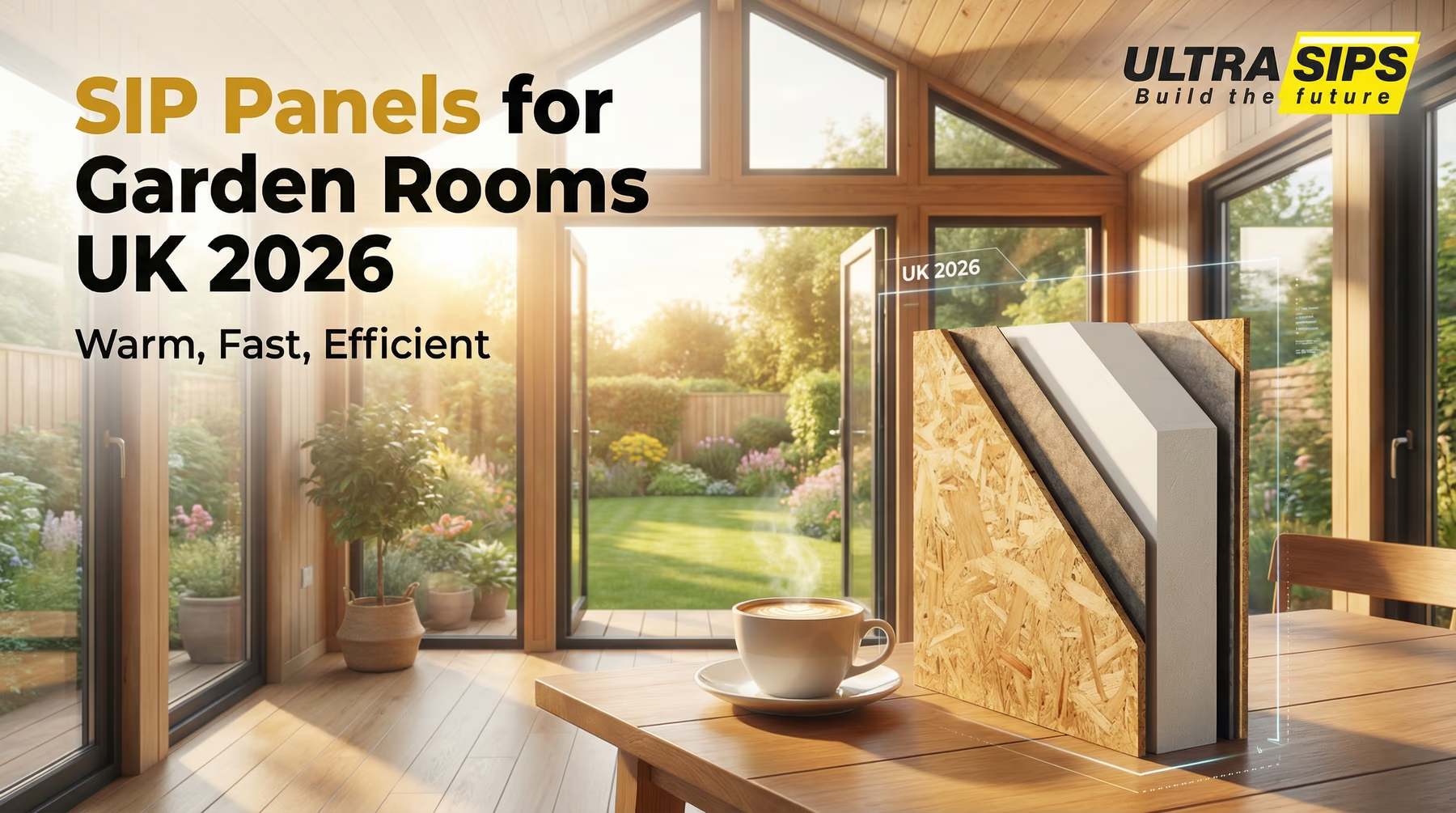
Plan a Warm Garden Room or Outbuilding
in 2026 with SIP Panels UK
A practical guide to fast,
comfortable garden rooms and outbuildings using SIP panels, with U-values, airtightness, and cold weather planning.
p>
Updated: January 2026 |
UK project guide
Key takeaways for garden rooms and outbuildings
- SIP panels UK projects deliver warm, airtight garden rooms that are usable all year.
- U-values and airtightness control energy bills and comfort in cold weather.
- Fast installation reduces disruption and shortens the build programme.
- Planning foundations and services early avoids expensive rework.
- Use the configurator and U-value calculator to finalize the right spec.
A garden room or outbuilding is one of the most popular ways to add usable space without changing your main
house. In the UK, the challenge is keeping that new space warm and comfortable through winter without running up
energy bills. This is why SIP panels UK projects are becoming the preferred choice for high
performance garden rooms and outbuildings.
In this guide, we will show you how SIP panels deliver strong U-values, airtightness, and speed of build. We
will also cover foundations, services, and cold weather planning so your project stays on track and performs well for
years to come.
1. Why SIP panels are ideal for garden rooms
Garden rooms and outbuildings need to be warm, strong, and fast
to install. SIP panels achieve all three. Because the panels combine insulation and structure, you get a finished
shell that is strong and thermally efficient without multiple layers and trades.
SIPs are also ideal for smaller buildings because they maximize
internal space. A high performance wall can be thinner than a traditional build-up, which gives you more usable floor
area inside a compact footprint.
-
Year-round comfort: strong insulation and airtightness.
-
Fast installation: panels are cut off-site and assembled quickly.
-
Compact wall thickness: more internal space for the same footprint.
-
Clean site: less waste and fewer messy stages.
2. Thermal performance, U-values, and comfort
The main reason people choose SIP panels for garden rooms is
comfort. A well insulated SIP shell stays warm in winter and cool in summer, which means the space can be used as a
home office, studio, or guest room all year.
U-values measure heat loss. Lower U-values mean better
insulation. As a reference, a 122mm SIP panel can achieve around 0.209 W/m2K. Your exact U-value depends on your full
build-up, so always test it with a calculator before you finalize the design.
Good U-values reduce energy demand and keep running costs low.
That matters for garden rooms because they often rely on electric heating or small heat pumps. When heat loss is low,
those systems work more efficiently and cost less to run.
3. Airtightness, moisture, and ventilation
Airtightness is essential for a small building because air leaks
have a bigger impact in a compact space. SIP panels reduce these leaks by providing a continuous insulation layer and
fewer joints. That helps keep the space warm and prevents cold drafts.
With airtightness comes the need for controlled ventilation.
This can be as simple as trickle vents and a small extractor or as advanced as a compact heat recovery system. The key
is to plan ventilation early so you avoid condensation and maintain good indoor air quality.
-
Seal junctions: focus on corners, roof interfaces, and floor edges.
-
Plan service penetrations: avoid cutting after installation.
-
Include ventilation: tight buildings still need fresh air.
-
Protect against moisture: stable internal temperatures reduce condensation risk.
4. Speed of build and programme planning
Garden rooms are often built to a tight schedule, especially if
you want the space ready for spring or summer. SIP panels are ideal because the shell can be assembled quickly. That
means fewer days of disruption, fewer weather-related delays, and a faster path to a finished space.
The key is preparation. Make sure the base is ready, the
delivery route is clear, and you have a plan for lifting and assembly. With those steps in place, SIP panels allow you
to move fast without compromising quality.
5. Foundations and floor options
A good foundation is essential for any SIP structure. Garden
rooms often use a concrete slab, but ground screws or suspended floors can also work depending on the site. The
important point is that the base must be flat, level, and accurately set out. SIP panels rely on a square base for
accurate assembly.
If you are using SIP floor panels, make sure the floor build-up
aligns with the wall system. A continuous thermal layer at the floor edge helps prevent cold bridging and improves
comfort in winter.
6. Design and layout tips
Design is where you decide how the space feels. SIP panels
support large openings, which is great for glazing and natural light. At the same time, think about overheating in
summer. Good orientation, roof overhangs, and shading can help.
Plan the location of doors, windows, and services early. Because
SIP panels are manufactured to your design, late changes can cause delays. The more detail you finalize early, the
smoother the build will be.
-
Window placement: balance daylight with heat loss.
-
Door positions: plan access and circulation from the start.
-
Services: decide where electrics and heating will run.
-
Roof design: align panel thickness with insulation targets.
7. Costs and energy bills
The cost of a SIP garden room depends on panel thickness, size,
and design complexity. While SIP panels can have a higher material cost than basic framing, the speed of installation
and reduced waste often balance this out.
The bigger savings come over time. A well insulated SIP room
requires less heating, which keeps energy bills low. If you plan to use the space year-round, that efficiency becomes
a major advantage.
8. Sustainability and low waste builds
SIP panels reduce on-site waste because panels are cut to size
in a factory. That means less offcut material and fewer skip loads. The improved thermal performance also reduces
energy use over the life of the building.
If sustainability matters to you, SIPs are a strong option
because they deliver both operational efficiency and cleaner construction.
10. Cold weather build tips
Cold weather is a reality in the UK, but SIP panels make winter
builds more achievable. The key is to protect panels before installation, keep the base dry, and schedule weather-
sensitive work carefully. Once the shell is closed, the interior environment stabilizes quickly, making it easier to
complete the fit-out.
-
Protect panels: keep them covered and dry before install.
-
Plan the lifting day: choose a calm weather window.
-
Seal quickly: tape joints as panels go up.
-
Prioritize weather-tightness: roof and openings first.
Garden room FAQ
Can a SIP garden room be used all year?
Yes. SIP panels provide strong insulation and airtightness,
making the space comfortable in winter and summer. With appropriate heating and ventilation, a SIP garden room can be
a true year-round space.
Do SIP panels reduce heating costs?
Lower U-values mean less heat loss, which reduces energy demand.
This is especially helpful in smaller buildings that would otherwise heat up and cool down quickly.
What panel thickness should I choose?
It depends on your target U-value and how you plan to use the
space. Thicker panels provide better insulation. Use the U-value calculator to test different thicknesses before you
decide.
Is planning permission required?
Many garden rooms fall under permitted development, but rules
vary. Always check local requirements and confirm if Building Regulations apply to your specific project.
How long does installation take?
The shell installation is typically fast because panels arrive
ready to assemble. The full timeline depends on foundations, services, and finishes, but SIPs help shorten the
critical path.
Can I finish the exterior to match my home?
Yes. SIP panels can be finished with a wide range of cladding
and roof materials. Your designer can specify the exterior finish that matches your home or garden style.
Next steps and resources
If you are planning a garden room or outbuilding in 2026, SIP
panels offer a fast, warm, and efficient solution. Use the resources below to plan your project with confidence.